
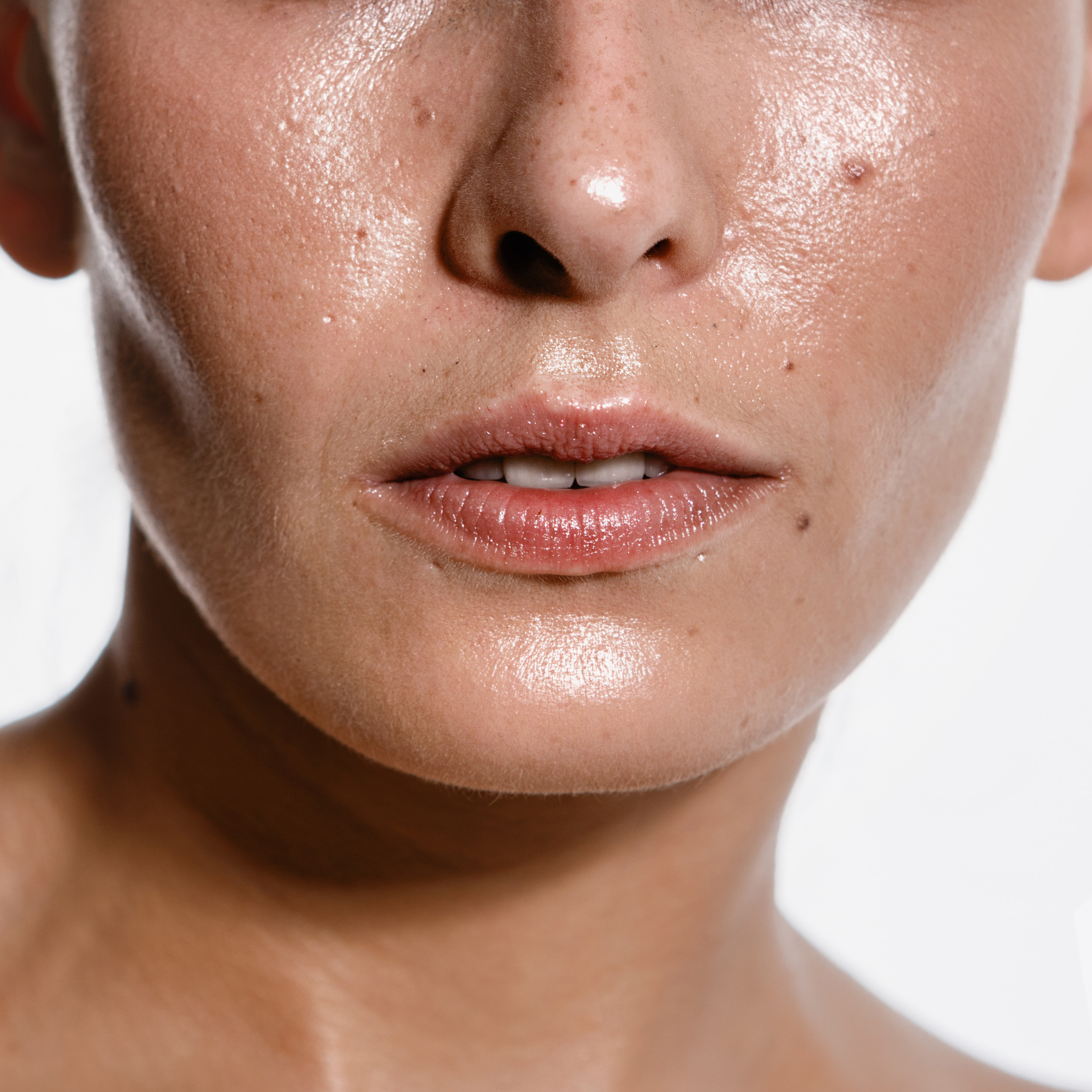
Once again, for the fifth time this morning, you’re ducking around the corner or into the bathroom and wiping your face with a tissue to remove the excess oil seemingly pouring out of your pores. You’ve tried multiple skin products to reduce the amount of oil your skin produces, but nothing seems to work. And instead of pulling out your phone to check notifications, you’re using your front camera as a mirror to quickly check whether you’ve missed any areas of your face that still have a sheen of oil.
You are not alone. It’s more common than you think and it’s nothing to be ashamed of.
We are going to clear away any misunderstandings of why skin creates oil in the first place, and touch on some factors that may be contributing to why the skin is producing excess amounts of it. We’ll also touch on treatments and products that are best suited to address oily skin.
Why does our skin produce oil in the first place?
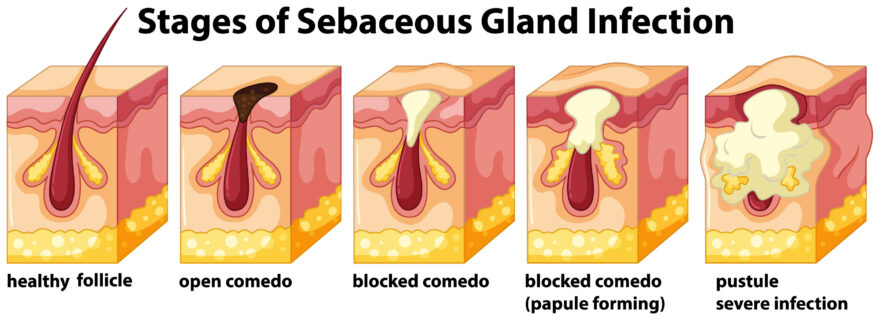
Within the dermis (the middle layer of the skin), usually attached to hair follicles, is a microscopic sebaceous gland. There are roughly 400-900 glands per square centimetre (that’s a lot!) on the face alone! These several million glands are designed to produce oil called “sebum” to protect the skin barrier, prevent dehydration, and lubricate the skin and hair.
Oil is the skin’s built-in defence system. Oily skin isn’t “bad skin” – it’s active skin. We don’t want to eliminate the glands from producing oil but instead influence them to regulate production to create more balance within the skin’s barrier.
Let’s have a look at some factors that may be causing your skin to produce an excess of sebum.

What causes excess oil production?
Hormones called androgens stimulate oil production. These hormones are more commonly prominent during puberty, high stress (increase of cortisol), around menstrual cycles, and/or with certain medical or hormonal conditions, causing an excess of oil production.
Are you cleansing more frequently than needed, or using a cleanser that exfoliates? Alcohol-based toners, or over exfoliating, can strip the skin barrier and can trigger the skin to produce even more oil to compensate.
If your skin is dehydrated (lacking water, not oil), it may overproduce sebum as a defence mechanism. This is why oily skin can still feel tight or flaky.
Moving onto the environment: working (or living) within hot and humid environments can increase oil flow, and if there is pollution in the air, it can trap the pollutants within the pores, clogging them up and, again, stimulating your skin to produce more oil in attempt to flush out the debris.
And finally, your diet and lifestyle! High glycaemic foods (foods that are digested quickly and cause a rapid spike in blood sugar and insulin such as white bread, white pasta, cornflakes, soft drinks, lollies, cakes, donuts, fruit juice, etc.), excess dairy, poor sleep, chronic stress, and lack of exercise can all influence excess oil production.
Treatments
Before we address excessive oil production with treatments and products, we always provide a mandatory thorough skin consultation to go over all aspects of your life that may be factoring in to why your skin may be producing more oil than it needs.
We first assist of what changes you can make with your diet and lifestyle habits that can reduce excessive oil production, making managing your condition more effective, and allowing the treatments and products to work more efficiently.
We take into consideration, and respect, your time (which is non-refundable), and your finances knowing how hard you work to thrive in today’s economy. Utilising the consultation time to really understand you and your skin reduces the chances of guesswork and we’ll be able to treat with accuracy and intention.
Below are some treatments that we could possibly utilise, depending on your skin type and lifestyle:

OxyGeneo:
A non-invasive facial that is customised to your current skin concerns/conditions with detoxifying and balancing skin impurities and oily complexions. This luxurious facial is designed to cleanse the pores, reduce the oily shine, and improve overall skin texture. The pods used include ingredients like Bamboo Charcoal, Camu-Camu extract, vitamin and antioxidants, and Mandelic Acid to soothe and detoxify.
For a simple, yet effective, treatment that clears buildup and excess sebum, improves skin surface balance and appearance, OxyGeneo is the way to go.
Click here for more information.

Hydrafacial:
This is also a non-invasive skin treatment with three steps to assist with oily skin. Starting with a deep cleans and gentle peel to remove dead skin cells accumulating upon the surface of the skin. The next step is extracting clogged pores and remove sebum, blackheads and debris. The final step includes a nutrient dense serum to help hydrate and nourish the skin barrier, helping it to control excess oil production and congestion.
Click here for more information.

Customised Programs:
Depending on the severity of excess oil production, and other skin concerns or conditions that are caused by oily skin, we provide programs that span over a few months that include chemical peels to deeply exfoliate, LED Light therapy to reduce inflammation and help bacterial control, high frequency & enzyme treatments to help lift debris and sebum from pores, as well as Laser Genesis that also helps to reduce inflammation and refine pores, reducing their size to restrict debris clogging them up.

Products
With so many products out there that promise so much but deliver so little, here are some pointers to consider when purchasing products to best address oily skin.
Note: We always suggest talking to one of our skin clinicians within your consultation who will provide the best products to suit your skin type and condition.
- Salicylic/BHA-based serums and exfoliants – These provide a deep cleanse of the pores by breaking down sebum, reducing oil buildup.
- Lightweight serums with Niacinamide or Retinol – Niacinamide is found to regulate sebum production, strengthens the skin barrier and reduces redness and inflammation. Retinol helps normalise skin cell turnover, reducing the amount of dead skin cells clogging your pores which stimulate oil production. Retinol also calms down the sebaceous glands from becoming enlarged and overactive.
- Oil-free or gel-based lightweight moisturisers to avoid contributing to the condition.
Conclusion
We hope you now have a deeper understanding of why our skin produces oil and that it’s part of your skin’s defence system. Unfortunately there are some factors that may be contributing to excess oil production but most can be addressed and changed to help manage regulating oil production.
Treatments and products that we advise will help influence your skin to create balance, clarity, and radiance, making it work with you rather than being disobedient and work against you.
We look forward to hearing from you soon so we can help your face glow with confidence!